


Augmented Reality (AR) is a technology that overlays virtual elements onto the viewer’s physical environment, creating immersive and interactive experiences. While the mass adoption of AR has been slow, its growth is inevitable.
As a relatively new technology, it will take time for AR to become ingrained in the general public’s consciousness. Factors such as price reduction and technological advancements will play a crucial role in driving its widespread adoption.
Although high-end smartphones offer limited AR features, full-fledged utilization of AR capabilities is yet to be realized. Platforms like Snapchat, Facebook, and Instagram have leveraged smartphone cameras to popularize AR through face filters and camera effects.
AR Development and Deployment: Companies like Facebook, Apple, and Google have been instrumental in advancing the AR platform. With their massive user bases, they naturally introduce innovative AR applications to their platforms. Apple’s ARKit, Snapchat’s Lens Studio, and Google’s ARCore have empowered developers to create efficient and engaging AR apps. In addition to existing virtual tape measures and photo-altering filters, future AR features hold promise, particularly in fields like neurosurgery.
The Power of AR Experiences: AR offers a superior user experience compared to traditional 2D content, providing vivid 3D experiences. The immense popularity of Pokémon Go, with 7.5 billion downloads, and Snapchat’s selfie lenses, with 160 million daily views, highlights the mass adoption of AR.
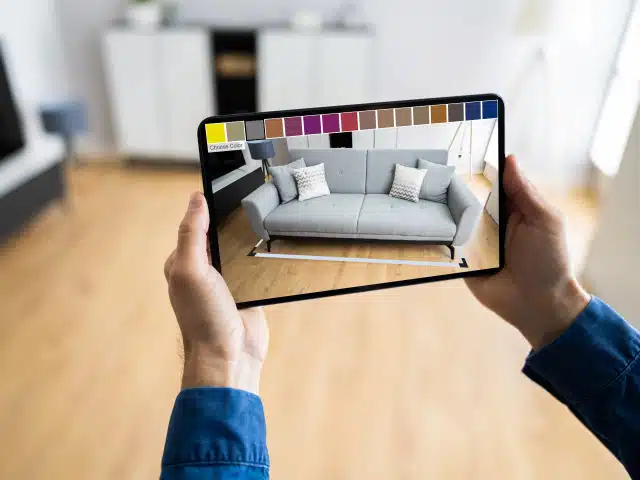
The field of e-commerce stands to benefit greatly from AR, as static display boards can be enhanced with immersive and interactive elements. For instance, furniture brand IKEA released an AR app that allows users to visualize virtual furniture in their own living rooms, demonstrating the potential of AR in enhancing customer experiences.
Conclusion: As AR continues to evolve, its widespread adoption is on the horizon. Although it may take time for the technology to become ingrained in everyday life, companies like Facebook, Apple, and Google are driving its development and deployment. AR offers immersive and engaging experiences, surpassing the limitations of traditional 2D content.
The future of AR holds countless possibilities, particularly in fields like e-commerce, where it can revolutionize product visualization and customer engagement. With its ability to blend the virtual and physical worlds, AR is poised to unlock new dimensions of human interaction and transform various industries.

