


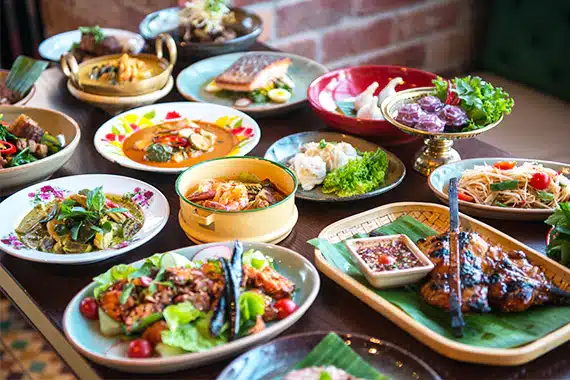
Food is often at the heart of cultural immersion, and nowhere is this truer than in Thailand. The country’s vibrant and diverse food culture is a testament to its rich history and traditions. Understanding Thai food etiquette and customs is essential for fully appreciating the culinary experience Thailand has to offer.
From street food vendors to upscale restaurants, the Thai dining experience is steeped in tradition and etiquette. Whether you’re a local or a visitor, embracing these customs will not only enhance your dining experience but also show respect for the host culture.
Thai Food Sharing and Dining Etiquette
In Thai culture, the act of sharing food is a fundamental part of the dining experience. Meals are typically served family-style, with multiple dishes placed in the center of the table for everyone to enjoy. This communal approach to dining reflects the value placed on togetherness and sharing.
When dining in a group, it’s customary to serve others before serving yourself. This gesture demonstrates politeness and consideration for others at the table. Additionally, the concept of “greng jai,” which loosely translates to “causing no inconvenience,” is deeply ingrained in Thai society. As a guest, it’s essential to be mindful of others’ needs and express gratitude for their hospitality.
Respecting Food Customs and Taboos
Thailand’s food customs include various taboos and practices that highlight the cultural significance of certain ingredients and dishes. For example, it’s important to handle chopsticks with care and avoid sticking them vertically into a bowl of rice, as this resembles a funeral ritual.
Furthermore, Thai cuisine often features a blend of flavors, including sweet, sour, salty, and spicy. Each of these tastes holds cultural significance, and balance is key to a harmonious dining experience. Understanding and respecting these flavor profiles adds depth to your appreciation of Thai cuisine.
The Tradition of Street Food
Street food is an integral part of Thai food culture, offering a wide array of dishes that represent the country’s culinary diversity. Whether it’s pad Thai, som tam, or mango sticky rice, these iconic dishes are not only delicious but also a reflection of Thailand’s vibrant street food culture.
Engaging with street food vendors provides an authentic glimpse into everyday life in Thailand. While the ambiance may be informal, the respect for the food and its preparation remains paramount. Embracing this aspect of Thai food culture allows for a deeper connection with the local community and its culinary traditions.
Embracing Thai Dining Customs as a Guest
As a visitor to Thailand, embracing the local food customs demonstrates a genuine interest in the culture and fosters meaningful interactions. Learning a few basic Thai phrases related to dining, such as “arroy” (delicious) and “korp khun krap/ka” (thank you), can go a long way in creating rapport with locals and showing appreciation for their cuisine.
In addition, taking off your shoes before entering someone’s home or certain dining establishments is a common practice in Thailand. Showing respect for this custom illustrates an understanding of local traditions and showcases cultural awareness.
Final Thoughts
Thai food culture offers a multi-sensory journey that extends far beyond just the flavors and textures of the cuisine. By understanding and embracing the customs and etiquette associated with Thai dining, you can gain a deeper appreciation for the country’s culinary heritage and the values it embodies.
From the importance of togetherness and sharing to the nuances of flavor and ingredient symbolism, Thai food culture provides a window into the soul of the country. By partaking in this rich tapestry of traditions, you not only savor the incredible flavors but also become an integral part of the cultural experience. As you navigate the culinary landscape of Thailand, remember that respect, mindfulness, and an open heart are the keys to unlocking the full potential of this remarkable journey through Thai food culture.

