


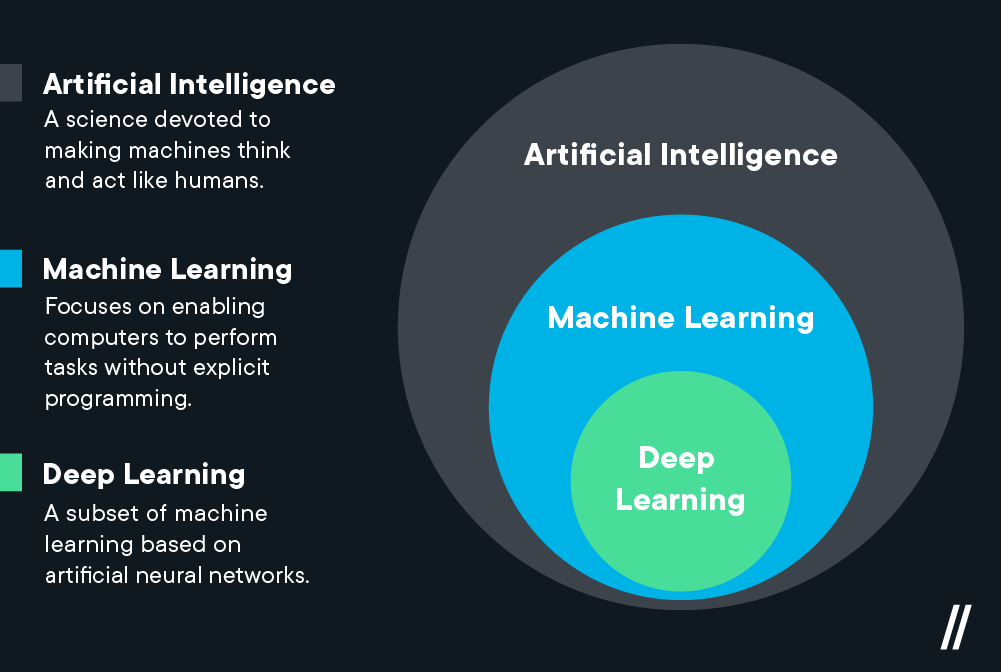
Artificial Intelligence (AI) and Machine Learning (ML) are frequently discussed topics, representing the future of technology. AI encompasses the development of computer systems capable of performing tasks that typically require human intelligence. In simpler terms, it aims to make machines smarter and capable of replicating human tasks. ML, on the other hand, is a technique that enables machines to learn and process data, making AI possible.
Researchers have been working on frameworks to build algorithms that teach machines to handle data similarly to humans. These algorithms give rise to artificial neural networks, which analyze data to make accurate predictions. To facilitate the creation of these networks, companies have released open neural network libraries like Google’s TensorFlow, which supports various platforms and programming languages such as Python, C/C++, and Java.
Artificial neural networks function similarly to the human brain, where each neuron processes and passes data to the next. For complex data, deep neural networks are derived from machine learning. It’s important to note that AI, ML, and deep learning are distinct terms, and in this article, we’ll focus on understanding the difference between machine learning and deep learning.
Machine learning involves processing data to predict outcomes using shallow neural networks with one input, one output, and minimal hidden layers. It can be classified into two types: supervised learning, which uses labeled datasets, and unsupervised learning, which works with unlabeled datasets lacking a specific structure.
In contrast, deep learning addresses more complex problems by utilizing deep neural networks consisting of multiple layers. These networks are designed for deep understanding and learning, as they incorporate a greater number of layers.
There are several architectures of deep learning, including Unsupervised Pre-trained Networks (UPNs), Convolutional Neural Networks (CNNs), Recurrent Neural Networks (RNNs), and Recursive Neural Networks. UPNs perform automatic feature extraction without explicit instructions, while CNNs simplify object or image recognition by using replicas of the same neuron. RNNs process sequential information and can utilize internal memory, making them suitable for tasks like speech recognition. Recursive Neural Networks, on the other hand, are utilized in Natural Language Processing (NLP) for tasks such as Sentiment Analysis.
To summarize, deep learning is an advanced form of machine learning that deals with unlabeled data and learns features automatically. It reconstructs inputs by minimizing guesswork through multiple layers, allowing it to handle vast datasets and unstructured information.
Looking ahead, both machine learning and deep learning have significant roles to play in various industries. Machine learning is already being implemented in customer service, enabling chatbots to answer queries accurately. Deep learning takes it a step further by gauging customer emotions and interests in real-time to provide a more refined customer experience. In the automotive industry, both machine learning and deep learning contribute to the development of autonomous vehicles and more efficient customer care systems.
As AI and big data continue to shape the future, organizations and individuals are increasingly exploring the potential of these technologies. Online courses and training programs are available to equip individuals with the knowledge and skills required to harness the power of AI and ML.

