


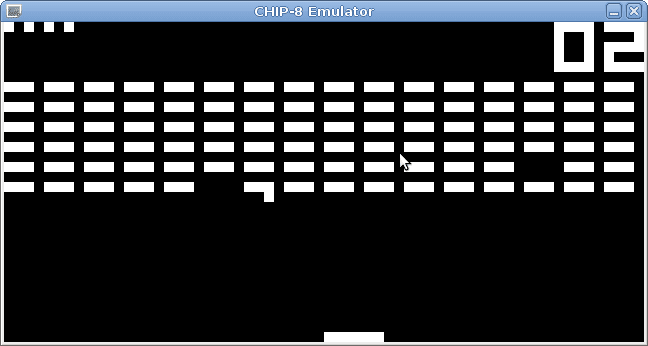
In the innovative landscape of the mid-1970s, as computing technology was beginning to emerge from the realm of academia and into the hands of enthusiasts, Design Engineer Joe Weisbecker crafted a transformative tool that would pave the way for amateur programmers and game developers.
This tool, known as CHIP-8, would not only democratize video game creation but also serve as a bridge between hardware limitations and creative aspirations.
The Birth of CHIP-8 and Its Purpose
Developed at RCA Labs in the USA, CHIP-8 emerged as a programming language aimed at empowering users of low-cost microcomputers.
Its primary objective was to allow enthusiasts to craft their own video games without the complexities associated with low-level machine code. In a time when interacting with computers often necessitated a deep understanding of intricate hardware architectures, CHIP-8 offered a remarkable departure.
It provided an abstraction layer that shielded programmers from the intricacies of binary coding, making game development more accessible and enjoyable.
Evolution of CHIP-8: From Keypads to Graphics
The mechanics of CHIP-8 were ingeniously simple yet effective. Programmers harnessed a hexadecimal keypad to input data, which triggered the generation of row and column signal lines. These lines were subsequently scanned by the computer to determine the keys pressed, enabling user interaction.
The introduction of CHIP-8 was met with a groundbreaking moment—the RCA COSMAC VIP became the first computer to integrate CHIP-8 as a resident language. This novel programming language operated as an interpreter-based system, residing in read-only memory (ROM) within the processor’s memory map, effectively functioning as the computer’s operating system.
Innovations and Limitations: Vintage Aspects of CHIP-8
Despite its vintage origins, CHIP-8 boasted innovations that reshaped the landscape of game development during its time. Yet, it also bore the limitations characteristic of the era. The graphics screen, for instance, sported a resolution of just 64×32 pixels, miles away from the high-definition displays of today.
Program addressing space was confined to a mere 4K bytes, curbed by the 12-bit width of the memory pointer (Register I). Notable features of CHIP-8 included its monochrome graphics capabilities, two-byte (4 hex digits) programming statements, a concise instruction set consisting of 33 instructions, and the provision of 16 one-byte variables (V0 to VF) that could be manipulated using arithmetic, logic, and conditional branch instructions.
The Unveiling of the CHIP-8 Screen
The canvas of CHIP-8’s creative playground was its computer screen, organized in the X, Y format. The coordinates ranged from 0 to 63 along the X-axis and from 0 to 31 along the Y-axis. The screen’s top-left corner was designated as the origin, with the coordinates 0,0 serving as the point of reference.
This simple coordinate system formed the foundation upon which CHIP-8 programmers crafted their virtual worlds, bringing to life games and interactive experiences that captured the imaginations of countless enthusiasts.
Beyond the Boundaries of Vintage: The Enduring Influence of CHIP-8
Though rooted in a bygone era, the spirit of CHIP-8’s innovation continues to reverberate. Its legacy can be traced in the democratization of programming tools, the accessibility of game development, and the enduring appeal of retro gaming.
CHIP-8 laid the groundwork for future generations of programmers, inspiring them to push boundaries and redefine the relationship between creativity and hardware constraints. As technology leaps forward, let’s not forget the ingenuity of CHIP-8—a small yet monumental step in the evolution of programming and gaming.
Example of CHIP-8 Code: To illustrate the simplicity of writing characters on the screen, here’s an example of CHIP-8 code:
Starting at address 0200 Hex:
VA=0

VB=0

I=210

SHOW 5 @ VA,VB

STOP
At address 210 Hex, the data is: F0,10,F0,80,F0,00
When executed, this program will display the number 2 on the screen at coordinate 0,0.

